Chest hair transplant is a hair restoration procedure that improves hair density on the chest with follicles taken from another part of the body, usually the scalp. It may be considered by men with naturally sparse chest hair, uneven growth, scars, or hair loss caused by surgery or injury. The procedure commonly uses FUE, which extracts individual grafts and places them in the recipient area according to the natural direction and pattern of chest hair. Results depend on factors such as donor hair quality, skin characteristics, graft survival, and realistic density goals. Before choosing treatment, readers often want to know whether chest hair transplantation is permanent, how many grafts may be needed, what recovery involves, and when new growth becomes visible. The following sections explain the process, suitability, risks, aftercare, and expected timeline.
What Is a Chest Hair Transplant?
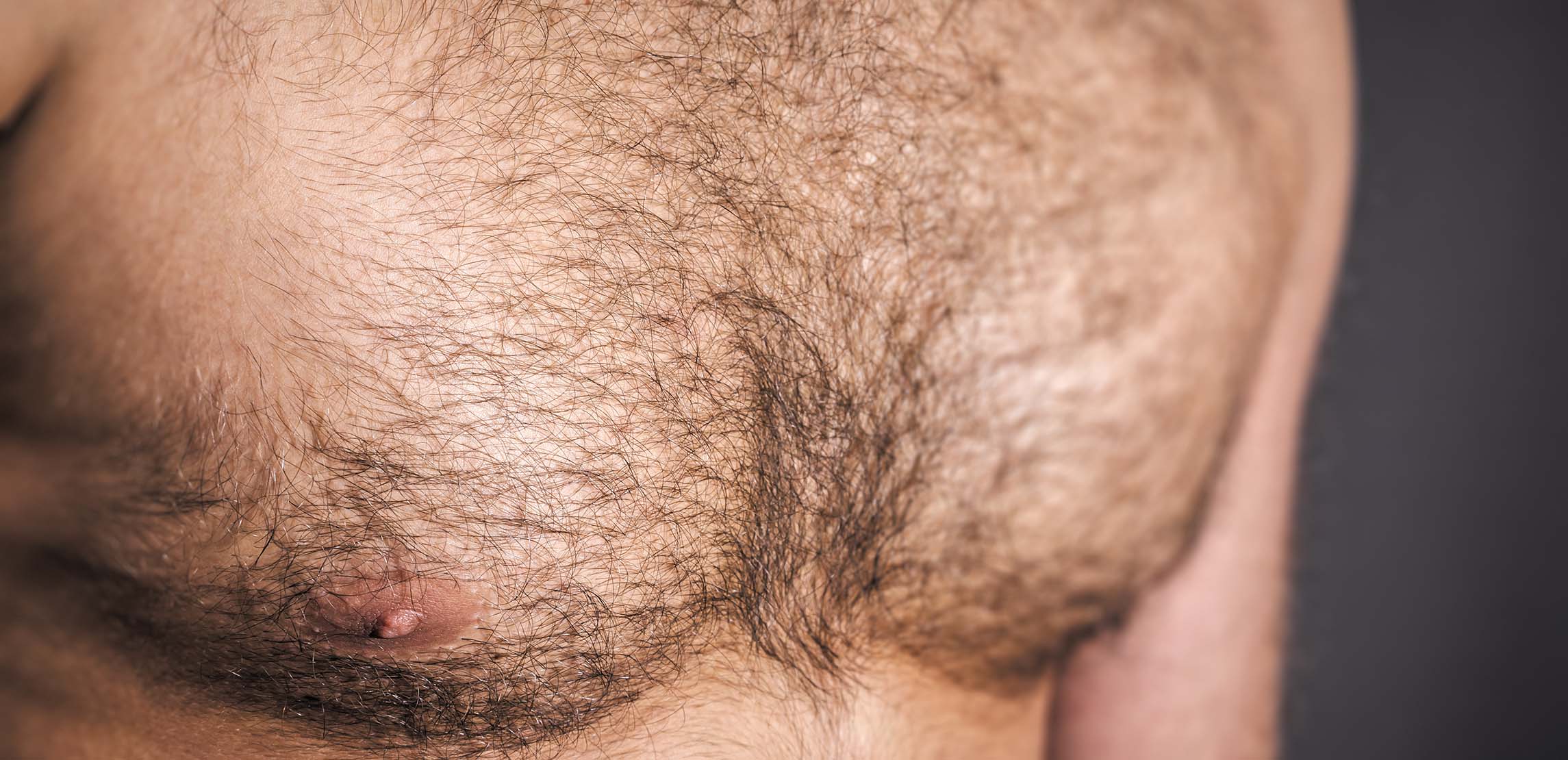
A chest hair transplant is a cosmetic hair restoration procedure that moves healthy hair follicles to areas of the chest with sparse, uneven, or absent growth. It may help create a fuller appearance after natural hair loss, scarring, surgery, or a naturally low-density chest pattern. The treatment uses the patient’s own follicles, so the transplanted hair is selected to match the existing chest hair as closely as possible.
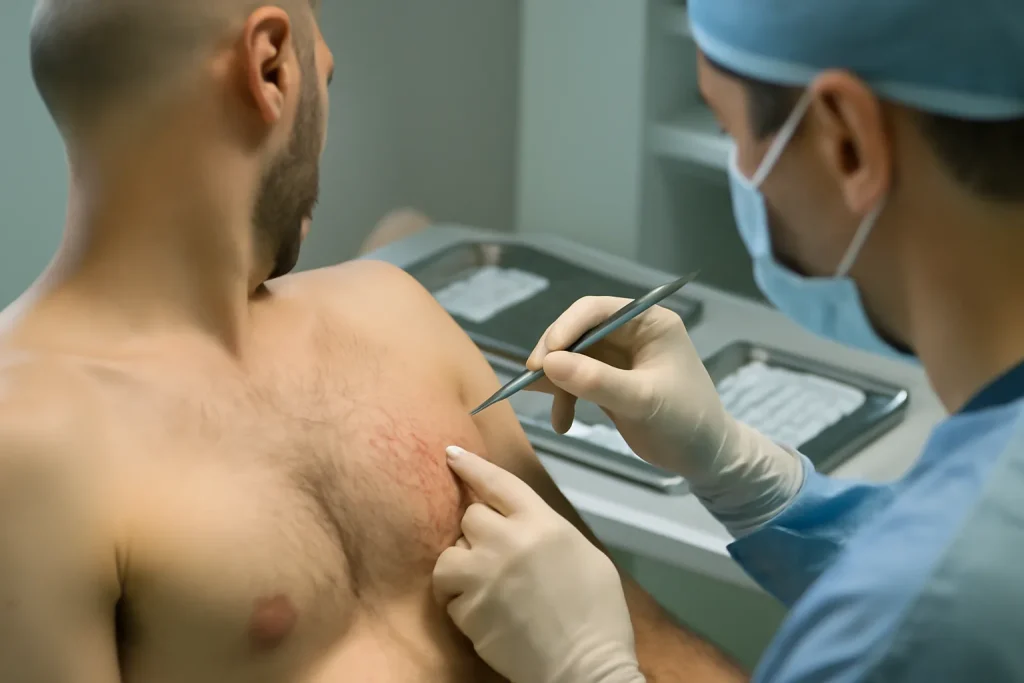
Most procedures rely on follicular unit extraction (FUE). During FUE, individual follicular units are removed from a suitable donor area, often the scalp or another region with compatible hair characteristics. These grafts are then prepared and inserted into small openings in the chest. The surgeon considers the natural direction, angle, spacing, and density of existing hair so the result blends with the surrounding area rather than appearing uniform or artificial.
The procedure can be tailored to different goals. Some people want to fill isolated gaps, while others seek broader coverage across the upper or central chest. Chest hair typically has different growth patterns, thickness, and curvature from scalp hair, which makes careful planning essential. The amount of coverage depends on donor supply, skin quality, the size of the recipient area, and the patient’s expectations.
Newly placed follicles do not produce immediate visible growth. Temporary shedding can occur before the follicles enter a new growth cycle, and the final appearance develops gradually over the following months. A qualified hair restoration surgeon should assess the cause of reduced chest hair and determine whether transplantation is appropriate.
Who Is a Good Candidate for Chest Hair Restoration?
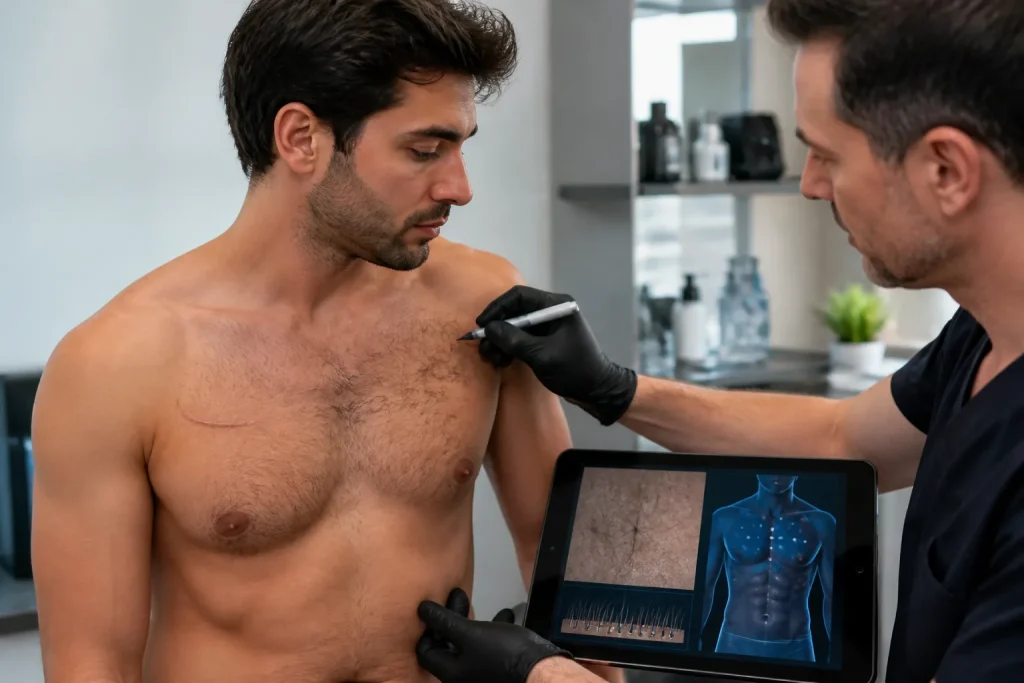
Suitability for chest hair restoration depends on the availability of healthy donor follicles, the reason for hair loss, and the appearance the patient wants to achieve. Men with naturally sparse or uneven chest hair may consider treatment for improved definition, while others seek coverage after scarring, surgery, injury, or a previous procedure.
The most important factor is the quality of the donor area. Follicles are commonly taken from areas such as the beard, abdomen, or another part of the chest, depending on hair characteristics and the surgeon’s assessment. The donor hair should have a texture, thickness, and growth pattern that can blend naturally with the recipient area. Sufficient follicle density is also necessary, since removing too many grafts can create visible thinning elsewhere.
Good candidates are generally in stable health, have realistic expectations, and understand that results develop gradually rather than immediately. A consultation should assess skin condition, existing chest hair, scar tissue, hair loss patterns, and any medical factors that could affect healing. Active skin infections, uncontrolled health conditions, or unstable hair loss may require treatment or further evaluation before surgery.
Patients should also be comfortable with the possibility that transplanted hairs may initially shed before regrowth begins. The final appearance depends on graft survival, hair direction, density goals, and individual growth. A qualified hair restoration surgeon can determine whether transplantation is appropriate and explain alternatives if the donor supply or expected outcome is limited.
How Are Grafts Collected and Placed?
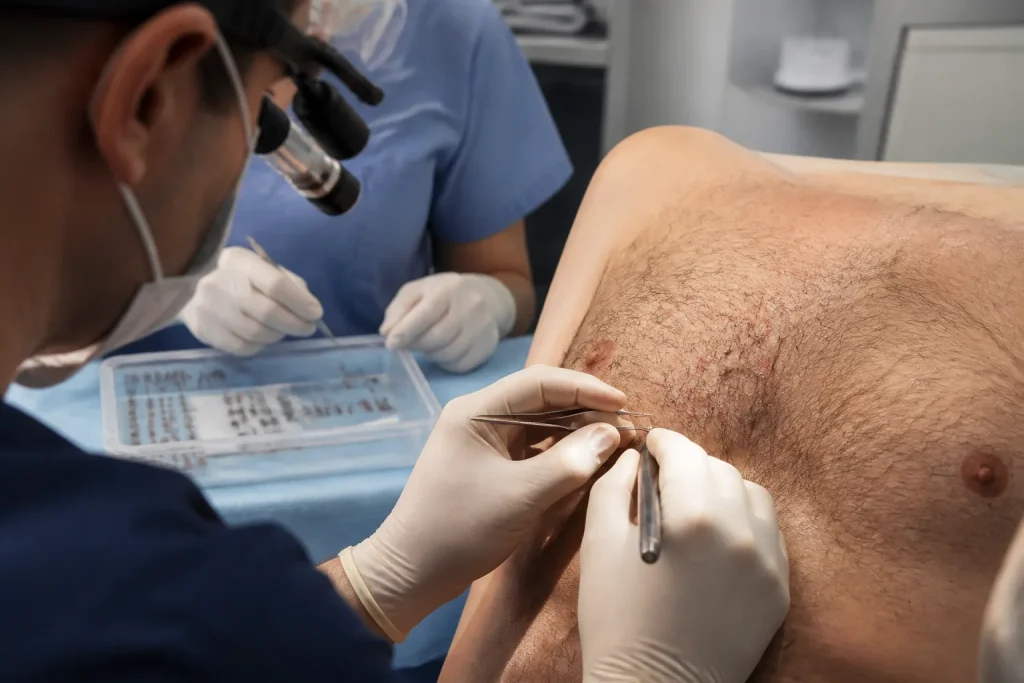
Graft collection and placement are carefully planned to match the characteristics of the existing chest hair. During the consultation, the surgeon assesses hair direction, thickness, curl, skin quality, and the available donor supply. This planning helps create a result that blends with the surrounding hair rather than appearing artificially uniform.
With FUE, individual follicular units are removed from a suitable donor area using a small motorized or manual punch. The surgeon selects grafts according to the number of hairs they contain and handles them gently to protect the follicles. They are then kept in a temperature-controlled solution until implantation, since prolonged exposure or drying can reduce graft viability.
- Donor preparation: The selected area is trimmed and cleaned before local anaesthetic is administered, allowing extraction to take place with minimal discomfort.
- Graft sorting: The collected follicular units are examined and separated according to their hair count, quality, and intended use.
- Recipient-site design: The surgeon marks the treatment zone and establishes the angle and direction of each incision to follow the natural growth pattern.
- Implantation technique: Grafts are inserted into the recipient area with fine instruments. Some clinics may use implanter pens associated with DHI, while others place grafts into prepared channels.
The placement pattern is especially important because chest hair usually lies at a shallow angle against the skin. Grafts must therefore be positioned with consistent direction and spacing while allowing room for circulation and future growth. The number of follicles used depends on the treatment area, desired density, and the surgeon’s assessment of the donor area.
What Results and Recovery Can You Expect?
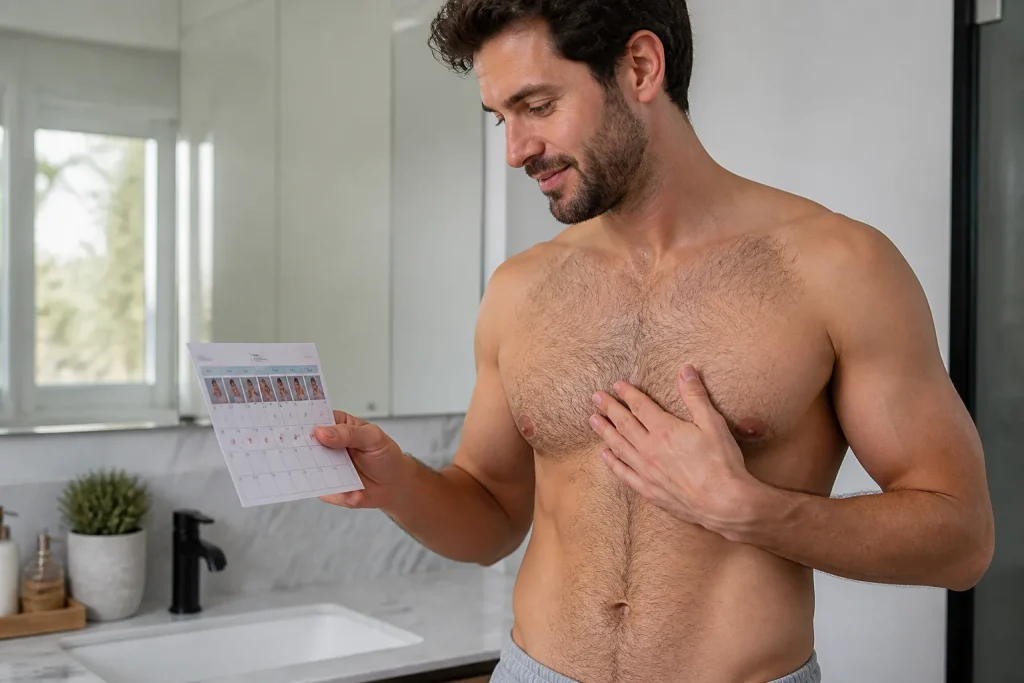
Recovery after a chest hair transplant is usually gradual, and the final appearance develops over several months rather than immediately after treatment. Mild redness, swelling, tenderness, or small crusts may appear in the recipient area and donor area during the first few days. These effects generally settle as the skin heals, although the exact recovery time depends on the number of grafts placed and individual healing patterns.
Newly implanted hairs may shed during the early weeks. This is a common part of the hair growth cycle and does not necessarily mean the follicles have failed. The transplanted follicles can remain beneath the skin before producing new shafts. Visible growth often starts after a few months, while texture, thickness, and overall density may continue improving for 6 to 12 months or longer.
Shock shedding can temporarily make the chest appear less full before new growth becomes noticeable. Patients should follow the clinic’s instructions about washing, exercise, sun exposure, friction, and topical products. Scratching or picking at crusts may interfere with healing, so the recipient area should be handled gently.
Results vary according to follicle characteristics, skin healing, existing chest hair, graft survival, and the design chosen during recipient-site planning. Some people achieve a subtle increase in density, while others may require additional grafts to reach their preferred coverage. Increasing pain, spreading redness, pus, fever, or persistent swelling should be reported promptly to the treating surgeon.
How Can You Maintain New Chest Hair Growth?
Maintaining newly transplanted chest hair depends on protecting the follicles during healing and managing the factors that can affect long-term density. Follow the clinic’s aftercare instructions closely, especially during the first few weeks. Avoid rubbing, scratching, tight clothing, intense exercise, swimming pools, and direct sun exposure until the recipient area has adequately recovered.
Gentle washing should begin only when recommended by your medical team. Use a mild cleanser, lukewarm water, and light fingertip pressure rather than scrubbing. Do not pull at loose hairs or flakes, as the visible shaft may shed while the follicle remains beneath the skin. This temporary process, known as shock shedding, is generally part of the early growth cycle.
Consistent aftercare is the most practical way to support healing and protect the implanted grafts. Attend follow-up appointments so your clinician can assess skin recovery, follicle development, and changes in hair density. If redness, swelling, pain, discharge, or persistent irritation worsens instead of improving, seek medical advice promptly.
Once the area has healed, protect the chest from repeated ultraviolet exposure with clothing or a suitable sunscreen recommended by your clinician. Avoid applying minoxidil, exfoliants, or other hair-growth products unless they have been specifically approved for you. A balanced diet, avoidance of smoking, and treatment of any underlying skin or hormonal condition may also help preserve the overall appearance of chest hair over time.
FAQs
Can chest hair be used as a donor source for scalp restoration?
Yes, chest hair can sometimes serve as an alternative donor source for scalp restoration, usually through FUE. Its texture, growth cycle, and length may differ from scalp hair, so surgeons typically use it to add coverage or density rather than replace the primary scalp donor area. A specialist must assess chest hair quality, available grafts, and the recipient area to determine whether it is suitable.
Is a chest hair transplant painful?
A chest hair transplant is usually performed under local anaesthesia, so most patients feel little or no pain during the procedure. Mild soreness, tightness, swelling, or tenderness may occur in the donor and recipient areas for a few days afterward and can generally be managed with prescribed or recommended pain relief. Recovery and discomfort vary depending on the number of grafts, the FUE or DHI technique used, and individual sensitivity.
How long does it take to see the final results?
Final results typically become visible 9 to 12 months after a hair transplant, although some patients may need up to 18 months to see their full hair density. New growth usually starts around the third or fourth month and gradually thickens as the transplanted follicles mature. Following your clinic’s aftercare instructions and attending follow-up appointments can help monitor recovery and progress.